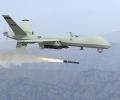
A United States drone fired two missiles in Pakistan's northwest tribal region on Thursday night amid anti-drone protests being staged in the country.
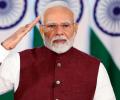
Operation Sindoor has carved out a new benchmark in our fight against terrorism, and has set up a new parameter and new normal. Operation Sindoor is not just a name but a reflection of the emotions of millions of Indians. Operation Sindoor is an unwavering pledge for justice. Terrorists dared to wipe 'sindoor' from the foreheads of our sisters; that is why India destroyed the very headquarters of terror.
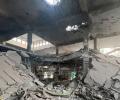
'This operation was a culmination of such long (period) of efforts, and gives us satisfaction that whatever we have been doing, we have been doing correctly'

Punjab Chief Minister Bhagwant Mann announced a Rs 5 lakh ex gratia from the Chief Minister's Relief Fund for the family of Sukhwinder Kaur. He expressed deep sorrow over Kaur's death.
'Only those who live through these situations understand the true cost of war.'

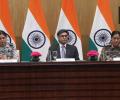
India's Foreign Secretary Vikram Misri said on Thursday that the choice of de-escalation is with Pakistan, as India only responded to the April 22 Pahalgam terror attack, which killed 26 people. He added that Pakistan has been escalating the situation with cross-border terrorism against India for decades.
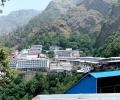
As we continue our climb, I meet 59-year-old Pushpa Devi from Banaras. I stare at her in wonderment when she tells me this is her 45th visit to the temple. She is equally bewildered to hear this is my first visit!What is it that draws her here each year? 'Bas ek shabd hai. Shraddha. (There is just one word. Faith.)'

Trump said he had a series of phone calls on trade with both India and Pakistan.

Unless each attack drone can be neutralised, India will be literally deploying elephants to stamp out ants -- and the ants may still survive! points out N Sathiya Moorthy.

"If we have to ensure the safety of our country, we have to serve through our satellites. We have to monitor our 7,000 km seashore. We have to monitor the entire northern part continuously. Without satellite and drone technology, we can't achieve that."

'Operation Sindoor is still ongoing. The Prime Minister himself said that blood and water cannot flow together, that talks and terrorism cannot go together. So how can we have a cricket match with a country that indulges in terrorism?'

Zahra said that while the university officials visited the students and advised them to remain calm, they did not offer clarity on which areas might be safer.

The large number of missiles fired seemed to indicate an important militant was targeted. The identities of those killed could not immediately be ascertained.

During the talks, the two sides appreciated the deepening of the defence ties as a key pillar of the strategic partnership and welcomed the creation of a Ministerial Committee on Defence Cooperation under the Strategic Partnership Council.

Pakistan Army and United States-led forces in Afghanistan have decided to target Tehreek-e-Taliban chief Mullah Fazlullah using drones rather than a ground operation in the areas where he is believed to be taking sanctuary.
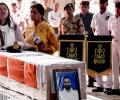
The family of Navy officer Vinay Narwal, killed in a terror attack in Pahalgam, expressed gratitude for "Operation Sindoor", the Indian military's retaliatory strikes against terror infrastructure in Pakistan and PoK. Vinay's wife, Himanshi, who was widowed during their honeymoon, called the operation a testament to her late husband's spirit and a strong message against terrorism. Vinay's father, Rajesh, said the strikes would make terrorists think twice before carrying out such attacks. The operation was lauded for its decisive response to the Pahalgam attack, which claimed the lives of 26 tourists.

In the last few weeks, the Indian Navy has extended assistance to a number of merchant vessels in the Western Indian Ocean following attacks on them.

The Chandigarh administration on Friday sounded a fresh air raid siren, appealing to people to remain indoors. The development came amid escalating tension between India and Pakistan.
United States President Donald Trump has expressed strong disapproval of Israel and Iran 'violating the ceasefire' he announced earlier in the day and said the two countries have been fighting 'so long and so hard that they don't know what the f*** they're doing'.
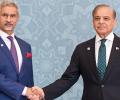
Addressing a special 'Youm-e-Tashakur' event at the Pakistan Monument in Islamabad, Shehbaz said that India and Pakistan fought three wars and got nothing.

Pakistan Muslim League - Nawaz chief Nawaz Sharif, who is poised to become Pakistan's new prime minister, on Monday said he wanted to strengthen his country's testy ties with the United States but insisted that the Central Intelligence Agency's controversial drone attacks must end as they posed a "challenge" to national sovereignty.

In the aftermath of the Pahalgam terror attack, which claimed 26 lives and injured many, the government ordered all Pakistani nationals to leave the country and revoked their visas.

The IDF said that its target was the Hezbollah commander, who was responsible for the attack at the football ground in Majdal Shams.
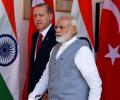
India-Turkiye ties are strained over Ankara's Islamabad tilt, its arms links with Pakistan, and fallout from the Pahalgam terror attack.

An eight-year-old boy was injured in a wolf attack while playing outside his home in the Mahsi tehsil in Bahraich, his family alleged on Friday.
'Pakistan is no longer a front-burner issue for America.'

Army Chief General Upendra Dwivedi asserted that Operation Sindoor was unlike any conventional mission and that it was akin to playing a game of chess as 'we did not know' what would be the enemy's next move.

'Pakistan will also try to turn Bangladesh into a base for terrorist attacks on India.'

The Iran-Israel conflict has further increased global economic uncertainties, impacting world trade, including India's exports, as it is expected to drive up both air and sea freight rates, exporters say. They said that India's exports to Europe and counters like Russia may get impacted due to this war.
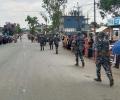
The militants fired indiscriminately from hilltop positions towards the low-lying valley areas of Koutruk and neighbouring Kadangband killing the woman and injuring four others, including her eight-year-old daughter and a police officer.

The wolves had been behind several attacks on villagers in Bahraich. The Uttar Pradesh Forest Department is taking the wolf to a rescue shelter.

The wolf had terrorised residents in over 35 villages and with its capture, the local population has breathed a sigh of relief, a statement issued in Bahraich said.

John Spencer, the chair of Urban Warfare Studies at US-based think-tank Modern War Institute, said India showcased its ability to strike any target in Pakistan "at will" and drew and enforced a "new red line" for cross-border terrorism under the operation that was launched early on May 7.

Pakistan has once again requested the United States to provide it with drone technology, so that it can carry out operations against the Taliban and other extremist groups in the lawless tribal region along the Afghan border.

The Border Security Force (BSF) destroyed five Pakistani posts and a terrorist launch pad across the Jammu border in an operation, an officer said. The BSF retaliated after Pakistan targeted civilian areas and Indian establishments in a systematic manner, the officer said.
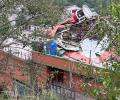
The military also claimed that 40 civilians, including seven women and 15 children, were killed and 121 others injured in strikes by India on the night of 6-7 May.
The missile strikes were carried out at Mohammad Khel and Degan in Datta Khel area of North Waziristan tribal agency that has witnessed numerous drone attacks in the past

An invasion of wolves is keeping the forest authorities on their toes in Bahraich, where the animal is suspected to have killed at least six people and wounded several, all within a very short span.

India's trade relations with Turkey and Azerbaijan are expected to come under strain due to Ankara and Baku backing Islamabad and condemning India's recent strikes on terror camps in Pakistan. Following their support to Pakistan, calls for boycotting Turkish goods and tourism have surfaced across the country, with online travel platforms such as EaseMyTrip and Ixigo issuing advisories against visiting these nations.
"It is shocking to note that Turkey, the second-largest arms supplier to Pakistan after China, has played a key role in modernising Pakistan's navy and enhancing its aerial warfare capabilities. "This defence collaboration is not just commercial; it is ideological, targeting the stability of South Asia and emboldening Pakistan's military adventurism," SJM national co-convenor Ashwini Mahajan said in a statement.
